Broker Check

Your IRA Will Be Taxed. The Question Is Whether You Decide How Much.

A strong portfolio doesn't automatically mean you have a strong plan. Gaps in insurance coverage, long-term care planning, or estate documents can sit unnoticed until illness, disability, death, or a care event brings them to the surface, often creating significant financial challenges.

At The CP Welde Group, we coordinate protection planning with your retirement income, taxes, investments, estate plan, and legacy goals. The goal is to identify risks early and help you make informed decisions about protecting the wealth you have built.

Schedule A Call

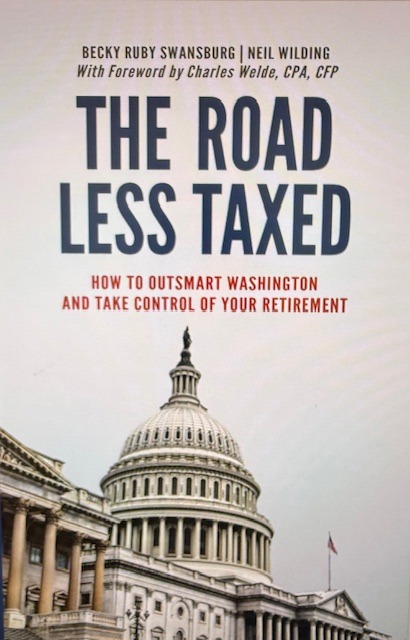
If you want to understand the broader tax landscape your retirement income is navigating, we recommend The Road Less Taxed, a practical guide to how shifting tax law affects retirement income and what you can do about.

⬇️ Download Your Complimentary Copy

What Is a Roth IRA Conversion, and How Can It Help?

A Roth IRA conversion moves money from a traditional IRA or 401(k) into a Roth IRA. You pay income tax on the converted amount now, in exchange for potential tax-free growth and withdrawals later, for you and for whoever inherits the account.

Not all money is taxed the same. A traditional IRA distributes as ordinary income. A brokerage account generates capital gains. A Roth IRA distributes tax-free. Where your retirement income comes from can matter as much as how much you've saved.

Why Careful Planning Matters

The years between retirement and the onset of Social Security and RMDs are often the best window for Roth conversion planning. Income tends to be lower, brackets are more favorable, and you still have flexibility. Once RMDs begin, they add taxable income whether you need it or not, narrowing your options and potentially triggering Medicare IRMAA surcharges that compound the cost.

What makes this unlike most financial decisions: it's irreversible. Congress eliminated the option to undo a conversion, which means delaying the conversation can have a measurable cost. As does acting on incomplete analysis – a Roth conversion strategy built on a handful of variables is less likely to be optimized.

How The CP Welde Group Approaches Roth Conversion Planning

How The CP Welde Group Approaches Roth Conversion Planning

  • A well-designed conversion accounts for:
  • Where the tax bill money is coming from
  • Your effective rate today versus projected rates in RMD years
  • Medicare surcharge exposure across conversion scenarios
  • Your beneficiaries' marginal tax rates
  • State income taxes
  • Long-term care exposure

  • Whether your priority is maximizing income for yourself or what passes to your heirs

Run one variable wrong and the conversion that looked smart on paper could end up costing significantly more than it saves.

At The CP Welde Group, Roth IRA conversion planning is one part of a coordinated strategy that integrates tax management, financial planning, asset management, protection planning, and legacy planning. A conversion decision made without visibility into all five can optimize one area while undermining another, which is exactly what our holistic approach is designed to help you avoid.

Many advisors bring either tax expertise or investment expertise to this conversation. We bring both, which means every conversion recommendation is made with your tax picture in sharp focus. In addition to his CPA designation, Charles Welde, CPA, CFP®, is a member of Ed Slott's Master Elite IRA Advisor Group, a designation that requires advanced, ongoing education specifically in IRA and distribution planning. Ed Slott's program is widely regarded as the most rigorous IRA training available to financial advisors in the country, and fewer than 500 advisors hold the Master Elite designation.

Ready to See Where You Stand?

If you have significant pre-tax retirement savings, the most important thing you can do right now is understand your options before the window narrows. We work primarily with pre-retirees and retirees with $500,000 or more in investable assets.

One conversation could change how the next 30 years of retirement income gets taxed. There's no obligation, but there is a real cost to waiting.

Serving families in Chadds Ford, PA and surrounding communities including Broomall, West Chester, Kennett Square, Unionville, Concordville, and greater Delaware County.

Schedule Your Complimentary Consultation Today

Frequently Asked Questions About Roth Conversions

What is a Roth conversion and how does it work?

A Roth conversion moves pre-tax money from a traditional IRA or 401(k) into a Roth IRA. You pay ordinary income tax on the converted amount in the year of the conversion. After that, the money {may} grow and be withdrawn tax-free, provided IRS rules are met.

Is a Roth conversion the right strategy for everyone?

No. Whether a conversion makes sense depends on your current and projected tax rates, the size of your pre-tax retirement accounts, your RMD timeline, Medicare premium exposure, beneficiary marginal rates, state income taxes, your legacy goals, and how long you realistically expect to have assets in the account. The longer the time horizon, the more a conversion may work in your favor, which makes life expectancy a more relevant variable.

Can I reverse a Roth conversion?

No. The option to undo a conversion was eliminated by Congress and is no longer available. This makes the timing and sizing of a conversion more consequential than it was historically. Working through the analysis with Charles and the team at The CP Welde Group before converting is strongly recommended.

When is the best time to consider a Roth conversion?

The period between retirement and the start of Social Security and RMDs is often the best window. Income tends to be lower during these years, which may mean the conversion is taxed at a lower rate. Once RMDs begin, they add taxable income that can narrow the conversion opportunity.

How does a Roth conversion affect Medicare premiums?

Roth conversions increase your adjusted gross income in the year of the conversion. If that income crosses certain thresholds, it may trigger IRMAA surcharges that increase your Medicare Part B and Part D premiums, sometimes two years later. This is one of several factors worth modeling before converting.

What are the different ways to structure a Roth conversion?

Roth conversion design can take several forms: converting a lump sum, converting a specified dollar amount each year, converting enough to fill your current tax bracket, or equalizing your effective tax rate across multiple years. The right structure depends on your income, account balances, timeline, and legacy goals. Each approach may produce a meaningfully different result, which is why the design process matters as much as the decision to convert.

What is the difference between a Roth IRA and a traditional IRA?

Contributions to a traditional IRA may be tax-deductible, and withdrawals in retirement are taxed as ordinary income. Roth IRA contributions are made with after-tax dollars, and qualified withdrawals are tax-free. Roth accounts are also not subject to RMDs during the owner's lifetime.

How does a Roth conversion affect my heirs?

Under the SECURE Act, most non-spouse beneficiaries are required to fully distribute an inherited IRA within 10 years of the original owner's death. Inheriting a Roth IRA rather than a traditional IRA may significantly reduce the tax burden on those distributions for your heirs, depending on their income at the time.